
Indoor Air Quality Testing for Mold & Airborne Particulates in South Puget Sound
Mitch Lowry
February 27, 2026
Indoor air quality (IAQ) plays a major role in the health, comfort, and long-term condition of a home. In the Pacific Northwest — especially here in the South Puget Sound — moisture is common, and where moisture exists, mold can follow.
Professional indoor air quality testing helps determine whether elevated mold spores or airborne particulates are present inside the home — even when growth isn’t visible.
Why Indoor Air Quality Testing Matters
Many air quality concerns are invisible. A home can look clean and well maintained while still containing elevated levels of:
Mold spores
Dust and fine particulates
Fiberglass particles
Pet dander
Combustion byproducts
Construction debris
Testing provides measurable data rather than guesswork. This is especially important when:
A musty odor is present
There has been past water intrusion
Occupants report respiratory irritation
A home has been vacant for an extended period
Buying or selling a home
Post-remediation clearance testing is needed
Air Sampling for Mold (Includes Airborne Particulate Analysis)
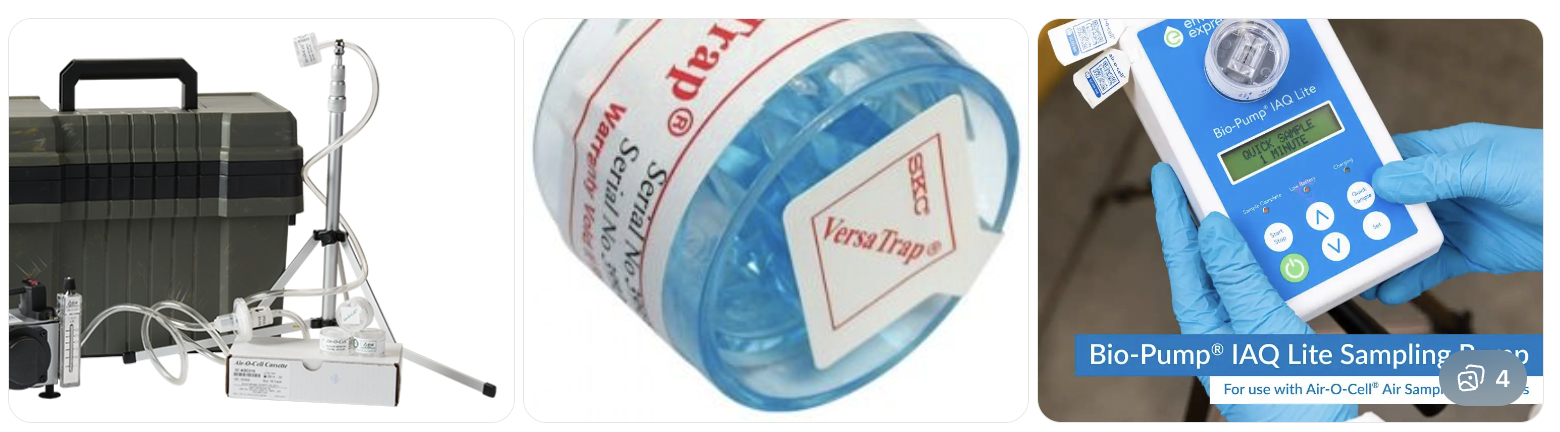
Air sampling for mold is performed using a calibrated air pump and a spore trap cassette — and this same sample also captures airborne particulates present in the air at the time of testing.
How It Works:
Calibration – The air pump is calibrated to a specific flow rate (commonly 15 liters per minute).
Controlled Sample Volume – A measured volume of air (typically 75 liters) is drawn through a spore trap cassette.
Particle Capture – Airborne mold spores and other microscopic particulates impact onto a collection slide inside the cassette.
Laboratory Analysis – The sample is analyzed under a microscope by an accredited laboratory.
Indoor vs. Outdoor Comparison – An exterior control sample is collected the same day for accurate comparison.
What the Laboratory Report Provides:
Total spore count per cubic meter
Identification of mold genera (Cladosporium, Penicillium/Aspergillus-like, Basidiospores, etc.)
Background debris levels (skin cells, fibers, dust fragments)
General particulate loading observed in the sample
Comparison of indoor air to outdoor control air
Because the air sample collects everything suspended in the air during testing, it allows evaluation of both mold spores and overall airborne particulate presence without requiring a separate test.
Spot Sampling for Mold (Surface Testing)
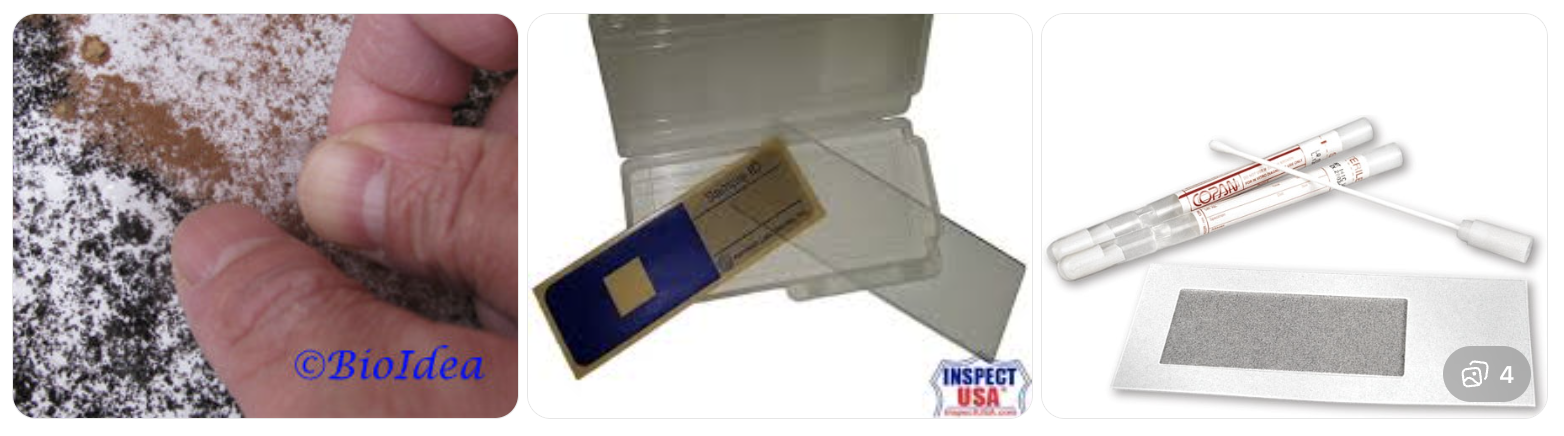
Spot sampling (surface sampling) is used when visible suspect growth is present.
Common Surface Sampling Methods:
1. Tape Lift Sampling
A clear adhesive slide is pressed directly against the suspected growth. The sample is sealed and sent to a laboratory for microscopic identification.
2. Swab Sampling
A sterile swab is rubbed across the suspect surface and placed into a sealed container for laboratory analysis.
Why Spot Sampling Is Important:
Confirms whether the material is mold (not dirt or staining)
Identifies the genus/type of mold present
Helps determine remediation scope
Provides documentation for buyers and sellers
Surface sampling does not measure airborne concentration — it identifies what is present on the material tested.
When Indoor Air Quality Testing Is Recommended
Indoor air quality testing is especially valuable in:
Homes with crawlspaces and elevated moisture conditions
Properties with prior roof or plumbing leaks
Recently remodeled homes
Vacant properties
Homes with reported health sensitivities
In Western Washington’s damp climate, proactive evaluation can prevent larger issues down the road.
What Testing Does — and Does Not — Do
Testing DOES:
Provide measurable, lab-backed data
Identify mold types present in the air
Capture and evaluate airborne particulates within the same sample
Compare indoor air to outdoor conditions
Document conditions at the time of inspection
Testing DOES NOT:
Replace a full remediation protocol
Predict future mold growth
Detect hidden mold inside sealed wall cavities without invasive inspection
Final Thoughts
Indoor air quality testing provides clarity. By collecting a calibrated air sample, both mold spores and airborne particulates can be evaluated together, giving homeowners and buyers objective information about the air they are breathing.
Whether you’re investigating a musty odor, verifying clean conditions after remediation, or simply documenting air quality during a real estate transaction, professional testing offers measurable peace of mind.