
Polybutylene Plumbing: Why It’s a Problem and How It Fails
Mitch Lowry | March 16, 2026
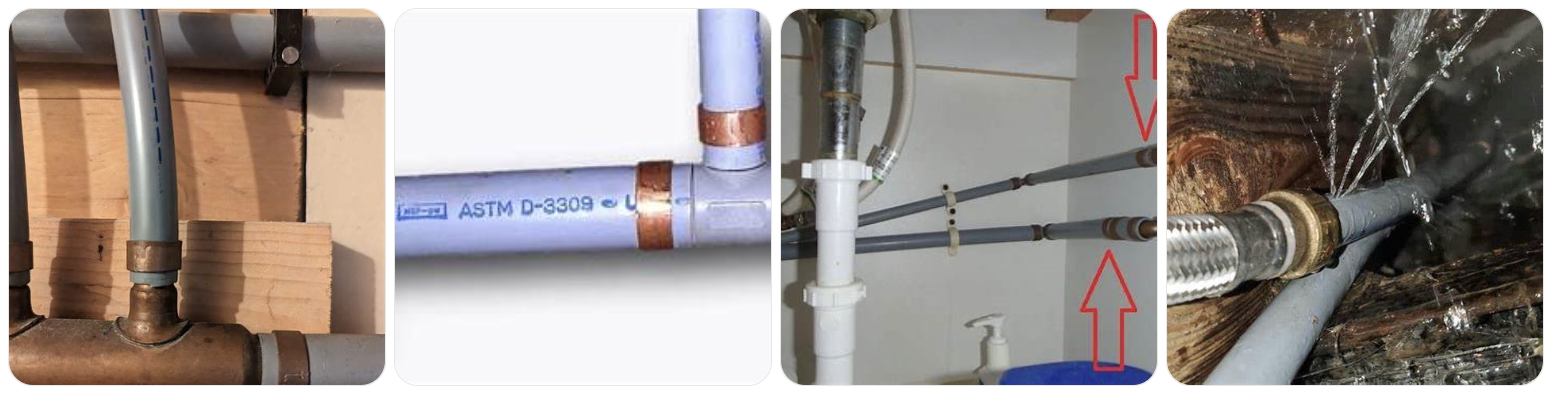
Polybutylene plumbing was widely installed in homes from roughly the late 1970s through the mid-1990s because it was inexpensive, flexible, and faster to install than copper. Unfortunately, it later developed a reputation for premature leaks, fitting failures, and costly hidden water damage. It became the subject of major litigation, including a nationwide settlement involving Shell and Hoechst, after widespread claims of leaks and resulting property damage.
One reason polybutylene is viewed as risky is that it can deteriorate from the inside out. Research and industry reporting have tied failures to oxidants in treated water, especially chlorine, along with heat and pressure over time. These conditions can reduce the material’s resistance, deplete protective additives, and lead to embrittlement and cracking that may not be obvious until a leak occurs.
Another weak point was the fitting system used in many installations. Older systems often used plastic acetal insert fittings, and those fittings were widely associated with brittle fractures, scaling, flaking, and leakage, especially in hot-water conditions. Some sources note that systems with metal fittings generally performed better than those with plastic insert fittings, but the material still carries a long history of reliability concerns.
The challenge for homeowners is that polybutylene failures are often hidden. A home can appear fine on the day of a walkthrough while the piping is slowly weakening behind walls, under floors, or in crawlspaces. When it does fail, the result can be staining, damaged drywall, warped flooring, insulation damage, and mold-friendly moisture conditions from even a relatively small leak.
Polybutylene is commonly identified as a gray plastic water supply pipe, sometimes stamped with markings such as “PB2110.” It may be found at water heaters, under sinks, in crawlspaces, or entering fixtures. Because not every installation fails at the same rate, the absence of visible leaking today does not necessarily mean the system is low-risk.
For buyers and homeowners, the biggest concerns are reliability, repair cost, and future insurability. Many inspectors recommend further evaluation when polybutylene is present, and many owners ultimately choose full replacement rather than waiting for a hidden failure. Modern replacement options are typically PEX or copper, depending on the home and budget.
Why this matters during a home inspection
A home inspection may identify the presence of polybutylene plumbing and note any visible leaks, staining, corrosion at fittings, or prior patchwork repairs. However, because much of the system is concealed, no visual inspection can guarantee that the piping will not fail later. That is why polybutylene is considered a significant material to know about during a purchase decision.
Common signs of concern
Visible gray plastic supply piping, especially with older plastic fittings, is the first clue. Other signs include past leak repairs, staining at ceilings or cabinets, white mineral deposits at fittings, or piping routed near the water heater where higher temperatures may accelerate deterioration.
Bottom line
Polybutylene plumbing earned its bad reputation because too many systems developed leaks and failures over time. The material may still be functioning in some homes, but its history of interior deterioration, fitting problems, and sudden leakage makes it a major item of concern for buyers, sellers, and homeowners alike. When polybutylene is present, it is smart to budget for further evaluation and to seriously consider replacement before a hidden leak turns into major damage.