
Is That Mold I See? Signs of Possible Mold in Your Home
Mitch Lowry | April 22, 2026
Seeing dark spotting or staining in a home can be alarming, but not every suspicious area is actually mold. Dirt, mildew, water stains, old adhesive, soot, and even wood discoloration can sometimes look very similar. That is why it is important not to guess based on appearance alone.
Mold typically develops where there has been ongoing moisture. Common places include bathrooms, around windows, under sinks, in attics, crawlspaces, around plumbing leaks, and anywhere ventilation has been poor. If a material stays damp long enough, mold can begin to grow and spread.
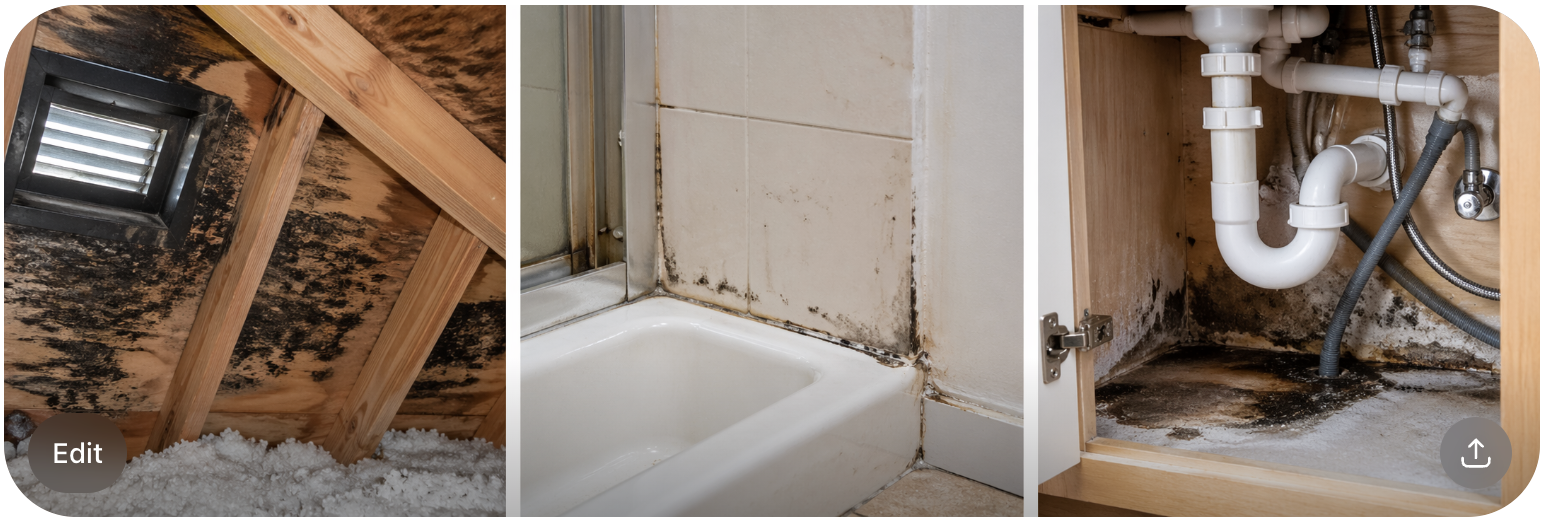
Possible mold in an attic, bathroom or under a sink
Some signs that may point to possible mold include staining that continues to return, fuzzy or speckled growth, musty odors, visible moisture, condensation, or past water intrusion. In attics and crawlspaces, mold-like growth is often found on wood sheathing, framing, or insulation when moisture conditions have been present over time.
The important thing to understand is that visible growth alone does not always tell the full story. Some materials may be discolored without active mold growth, while some mold may be present in areas that are not immediately obvious. That is why testing can be helpful, especially when you want clearer answers before buying, selling, repairing, or deciding how serious a condition may be.
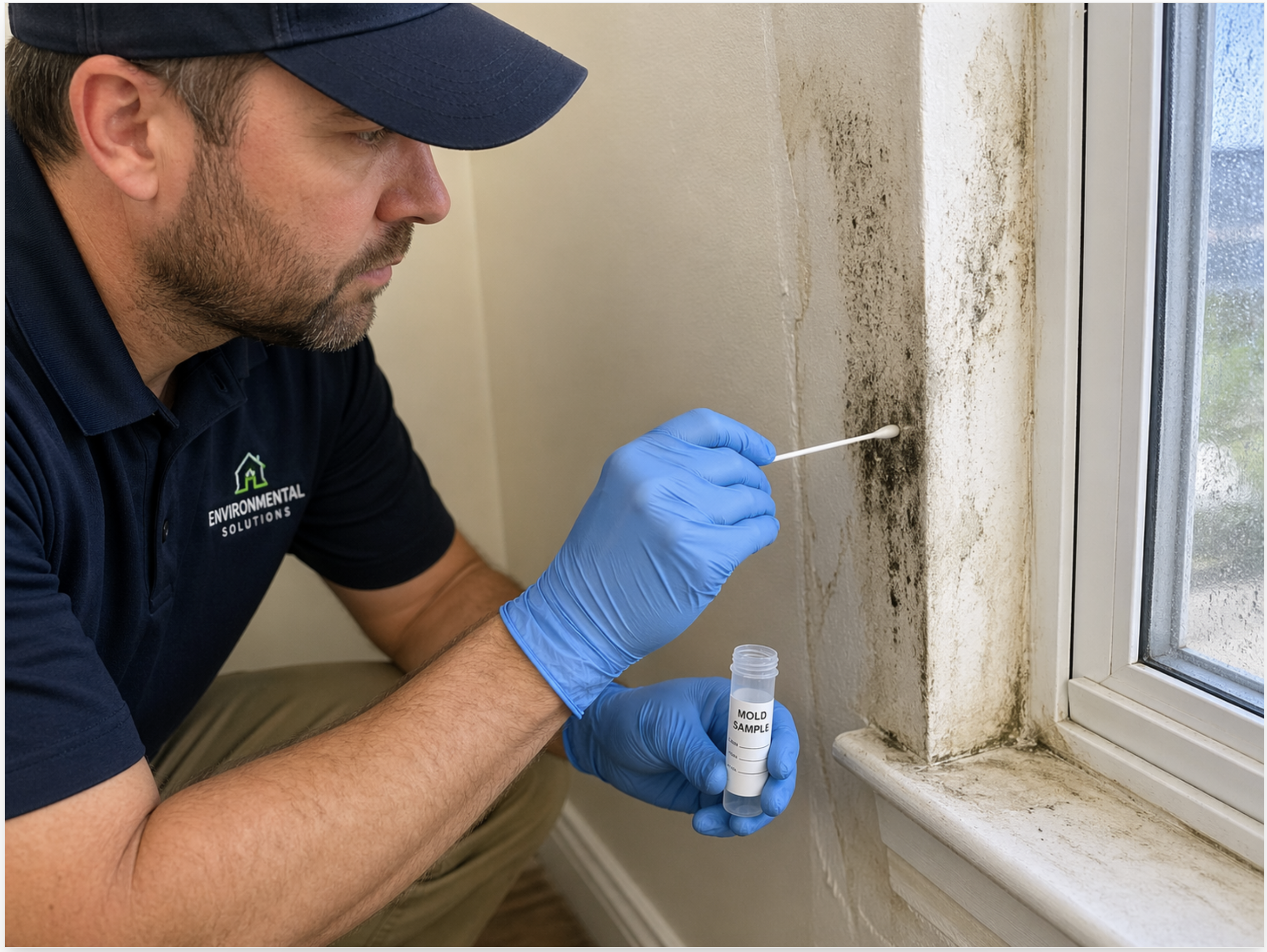
Testing mold with a swab.
If possible mold is seen, professional sampling can help identify what is present. Air samples can help determine what may be circulating in the indoor air, while swab or tape lift samples can help evaluate suspicious visible growth on surfaces. This can be especially helpful for people with sensitivities, ongoing concerns about indoor air quality, or homes with a history of leaks or moisture problems.
Just as important as testing is correcting the moisture source. Mold problems are usually moisture problems first. If the leak, humidity issue, poor ventilation, or drainage problem is not fixed, the condition can return even after cleanup.
If you are wondering whether a suspicious area is mold, the best next step is to have it evaluated rather than assuming. A closer inspection and, when needed, proper sampling can help you better understand what you are dealing with and what should happen next.
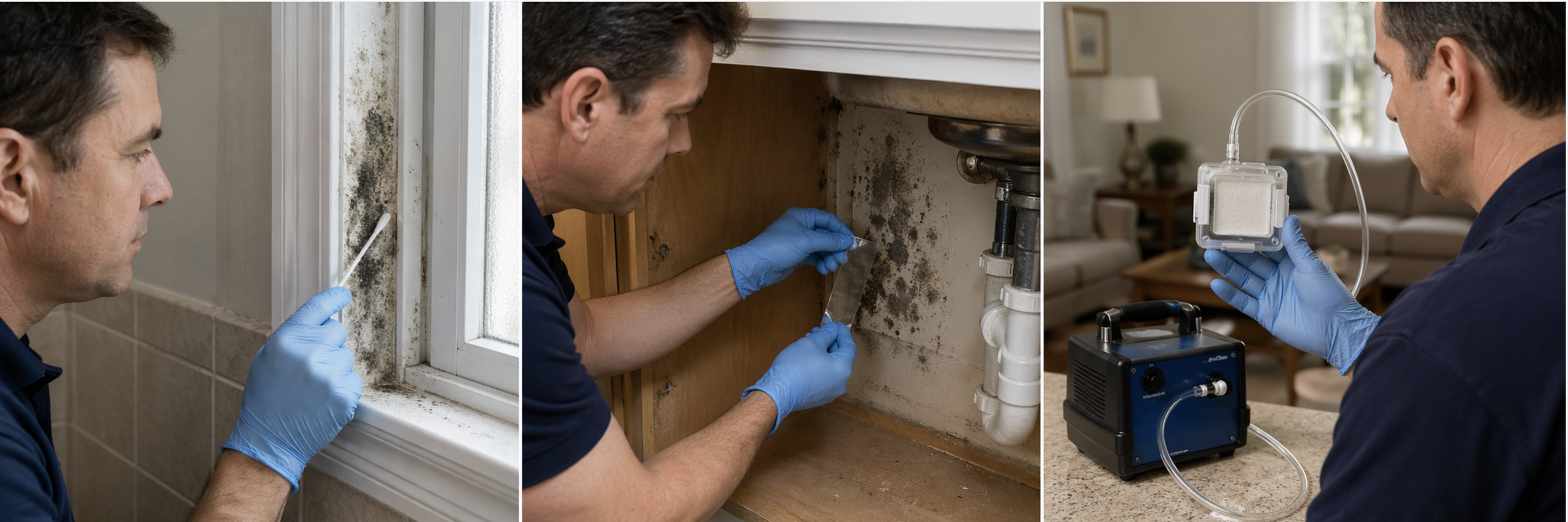
Testing with a swab, tabe and indoor air quality testing for mold or particulates
At South Puget Sound Home Inspections, I offer indoor air quality testing and mold sampling services to help clients get more information when suspicious growth or moisture-related concerns are found in a home. When there is visible staining, a musty odor, or a history of water intrusion, testing can be a useful next step toward understanding the condition and planning proper repairs or cleanup. Results typically come back within 2 days.